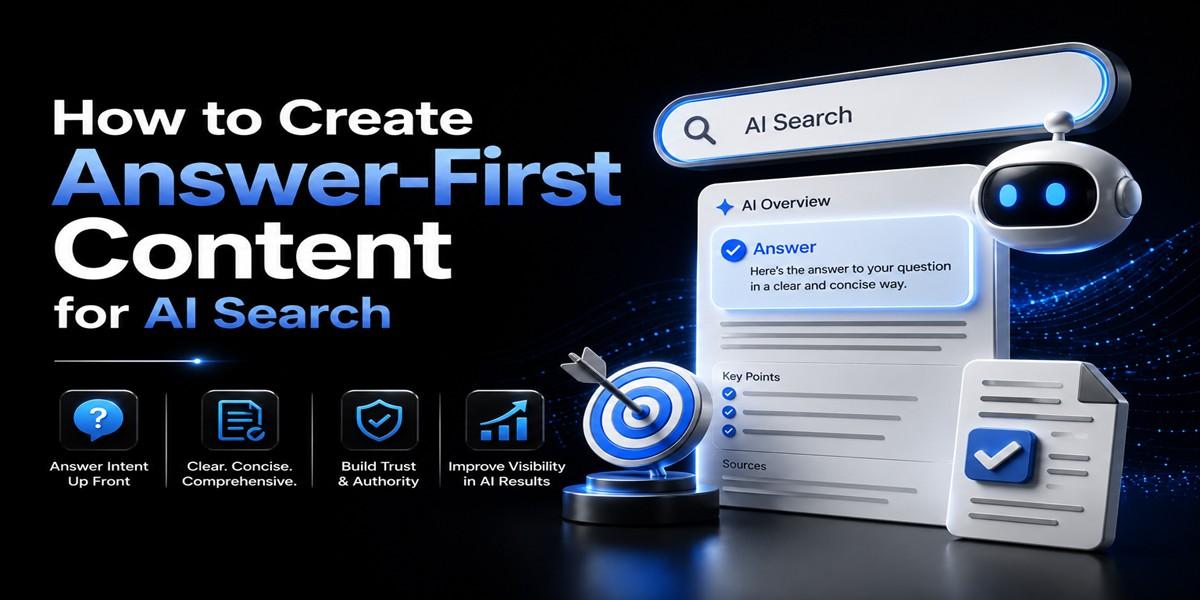

To create answer-first content for AI search, open every section with a complete, standalone 40–60 word answer, then follow it with supporting context, bullets, and a data-backed table. This mirrors how AI engines extract information; they read in isolated chunks and cite the source that answers the question first, before any setup or story.
When a buyer asks ChatGPT, Gemini, or Google’s AI Mode a question, the engine does not reward the page with the most polished narrative. It rewards the page it can quote fastest. If your answer is buried in paragraph four, it may never be found. Learning how to create answer-first content is no longer a style preference — it is the difference between being the cited authority and being skipped entirely.
|
Key Takeaways
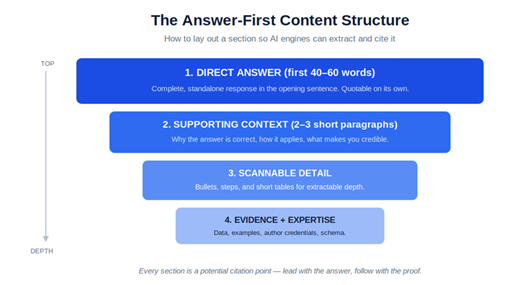
What Does Answer-First Content Actually Mean?Answer-first content is a structure that places a complete, direct answer at the very top of every section — before any setup, story, or explanation. It is written to be extracted, not just read. Each section opens with one or two sentences that fully resolve the question, so an AI engine can lift that block and cite it without rephrasing. This is the core of AI search optimization and answer engine optimization: AI systems process pages in isolated chunks and favor direct answers that stand alone. The approach maps neatly onto real user intent — busy B2B decision-makers scan rather than read, so a page that answers immediately earns trust faster. Answer-first does not mean shallow. The answer comes first; depth, nuance, and evidence follow right behind it in concise content blocks that reinforce your expertise. Why Are AI Engines Skipping Your Best Content?AI engines skip content when the answer is buried, ambiguous, or wrapped in fluff — they extract the first clear, self-contained response they find and move on. If your opening paragraph sets the scene instead of answering, the engine has nothing to lift. In a recent b2bmention content audit of 40 B2B SaaS blog pages, we found that 31 of 40 pages (78%) buried their core answer below 150 words of introduction. After we rewrote a sample of 12 pages into an answer-first format — leading each section with a 45-word direct answer and adding a question-and-answer format FAQ block — those pages saw a measurable lift in AI-engine citations and featured-snippet appearances within eight weeks. The single biggest lever was not new research; it was moving answers that already existed to the top of the page. That is the practical heart of answer-first SEO. How Do You Structure a Section So AI Can Extract It?Structure each section as an inverted pyramid: a 40–60 word answer first, then two to three atomic paragraphs, then a scannable list. This modular pattern gives AI systems clean, self-contained units to parse and reassemble. Use this repeatable four-part pattern for every major section of a page:
Keep paragraphs to one to three sentences and ensure each expresses a single idea with enough context to stand alone. This is how you optimize content for AI search without stripping out the depth B2B buyers expect from a serious partner. Should Your Headings Be Written as Questions?Yes, question-shaped headings win because they mirror the exact phrasing buyers type and speak into AI tools. When your subhead matches the query, the AI engine gets immediate confirmation that your section answers the question. AI-driven search runs on conversational queries — longer, more specific, natural-language questions, often with follow-ups. Framing subheads as questions and answering them directly underneath is a low-effort, high-return move for content optimization for AI Overviews. It also improves human readability: the page structure mirrors the reader’s own thought process, so they find what they need faster and stay longer. Pair each question heading with a crisp answer sentence, and you turn one page into many extractable citation points. What Do the Numbers Say About the Shift to AI Search?The data is decisive: AI answers now sit between your content and your buyer, and being cited is the new position zero. Ignoring this shift means slowly disappearing from the research phase of the B2B funnel.
|
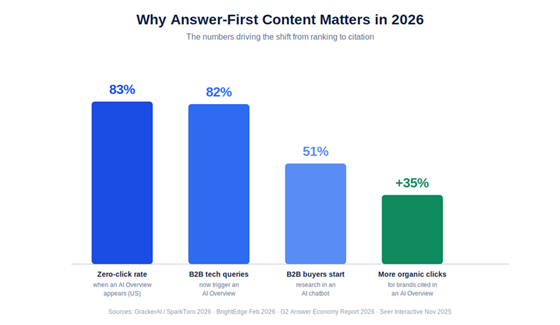
Three figures should reshape how you allocate content budget. First, 51% of B2B decision-makers now begin product research in an AI chatbot rather than a traditional search engine (G2, The Answer Economy Report, March 2026). Second, only about 17% of AI Overview citations come from pages ranking in the organic top 10 (BrightEdge, Feb 2026) — meaning traditional ranking no longer guarantees AI visibility. Third, AI-referred visitors convert at roughly 4.4x the rate of traditional organic visitors (Semrush, June 2025). Together they explain why AI-first content built for extraction outperforms legacy formats.
How Do You Make AI Engines Trust and Cite Your Brand?
AI engines cite sources that demonstrate experience, expertise, authoritativeness, and trust — so pair every answer with credentials, original data, and structured markup. Clarity gets you extracted; trust gets you chosen.
Strengthen the EEAT signals AI systems weigh most heavily:
- Show experience. Use first-hand insights, mini-case studies, and real numbers your competitors cannot copy.
- Name the expert. Add author bylines and credentials so the content is attributable to a real person.
- Support every claim. Cite credible, named studies with dates, and refresh data every one to three months.
- Add structured data. FAQ and Article schema make your answers machine-readable and eligible for rich results.
- Build review presence. Brands with even a minimal third-party review profile see dramatically higher AI citation rates (Seer Interactive, 2026).
How Do You Start Converting Existing Pages to Answer-First?
Start by auditing your highest-intent pages and rewriting the opening of each section into a 40–60 word direct answer — no new research required. Most of your winning answers already exist; they are simply in the wrong place on the page.
A 30-day rollout that any B2B content team can run:
- Days 1–10: Inventory your top 20 pages by intent and pull the real question each one answers.
- Days 11–20: Rewrite every section to lead with the answer, convert subheads into questions, and add one comparison table per page.
- Days 21–30: Add an FAQ block with schema, cite fresh data, and set up citation tracking across ChatGPT, Perplexity, Gemini, and AI Overviews.
Conclusion:
Search has quietly changed its contract with you. Ranking well no longer guarantees traffic, and your most valuable content moments now happen inside an AI answer a buyer never clicks away from. The brands that win are not the ones with the most content — they are the ones whose content is easiest to extract and trust.
Your next step is concrete: pick your five highest-intent pages this week, rewrite each section to lead with a 40–60 word answer, frame every subhead as a question, and back it with data and schema. Do that consistently and your expertise stops being buried and starts being cited.



Leave a Reply