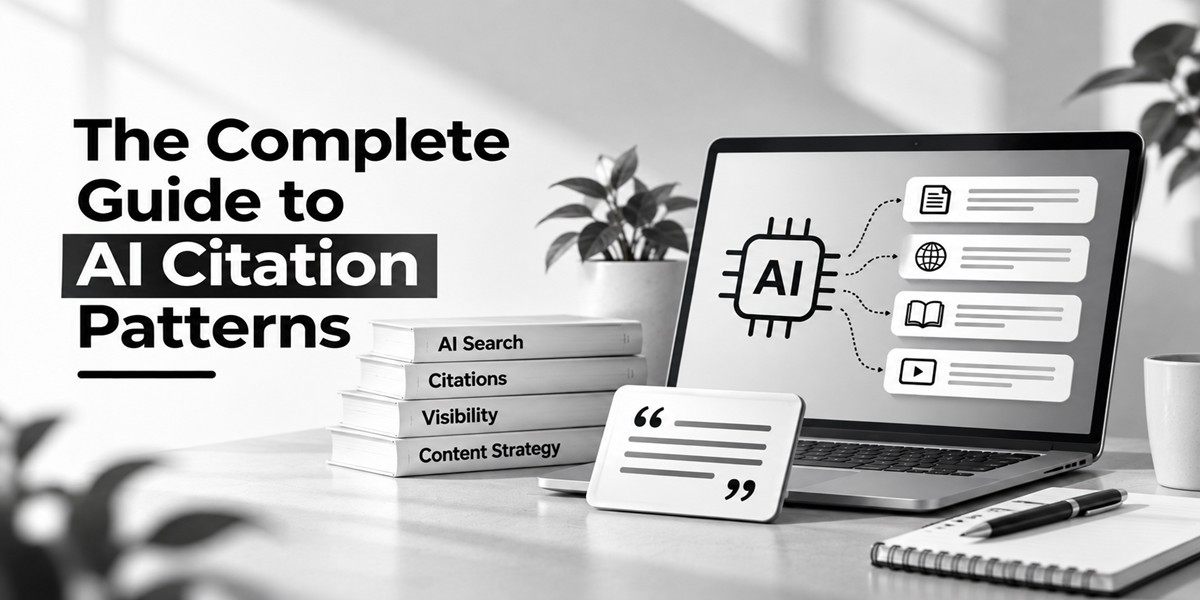

AI engines cite pages they can quote with confidence, and that is a different test from the one Google uses to rank. A business can sit on page one of Google for its best keywords and still never be named when a customer asks ChatGPT, Perplexity, or Google AI Mode for a recommendation.
For many buyers, the AI answer is now the first impression. If your brand is not in that answer, you are not on the shortlist, no matter how well you rank below it.
The good news is that AI citations are not random. Across large studies of millions of AI answers, the same patterns keep showing up. This guide breaks down how AI engines choose their sources, the six patterns that decide who gets cited, and a practical plan you can start on this week.
How AI engines choose their sources
An AI engine does not rank a list of pages. It builds an answer and then picks a handful of sources that back it up. Most answer engines follow roughly the same four steps:
- Fan-out. The engine splits your question into several smaller sub-questions. A search for “best patio contractor near me” might become searches about cost, materials, reviews, and permits.
- It searches an index (Google, Bing, or its own) for each sub-question and pulls a pool of candidate pages, often well beyond the top 10.
- Passage selection. It breaks those pages into chunks and keeps the passages that answer a sub-question clearly, specifically, and without needing extra context.
- It writes the answer and links the sources whose passages it used, favoring sources that agree with other trusted sources.
Every pattern below comes from one of these steps. If your content fails at any stage, it drops out, even if it ranks well in traditional search.
Pattern 1: Brand mentions matter more than backlinks
The strongest signal behind AI visibility lives off your website. When Ahrefs studied 75,000 brands, branded web mentions correlated with AI Overview visibility at 0.664, while backlinks correlated at only 0.218, roughly three times weaker (Ahrefs).
The same study found the effect compounds. Brands in the top quarter for web mentions earned over 10 times more AI Overview mentions than brands in the next quarter down, and about 26% of brands had no AI Overview mentions at all.
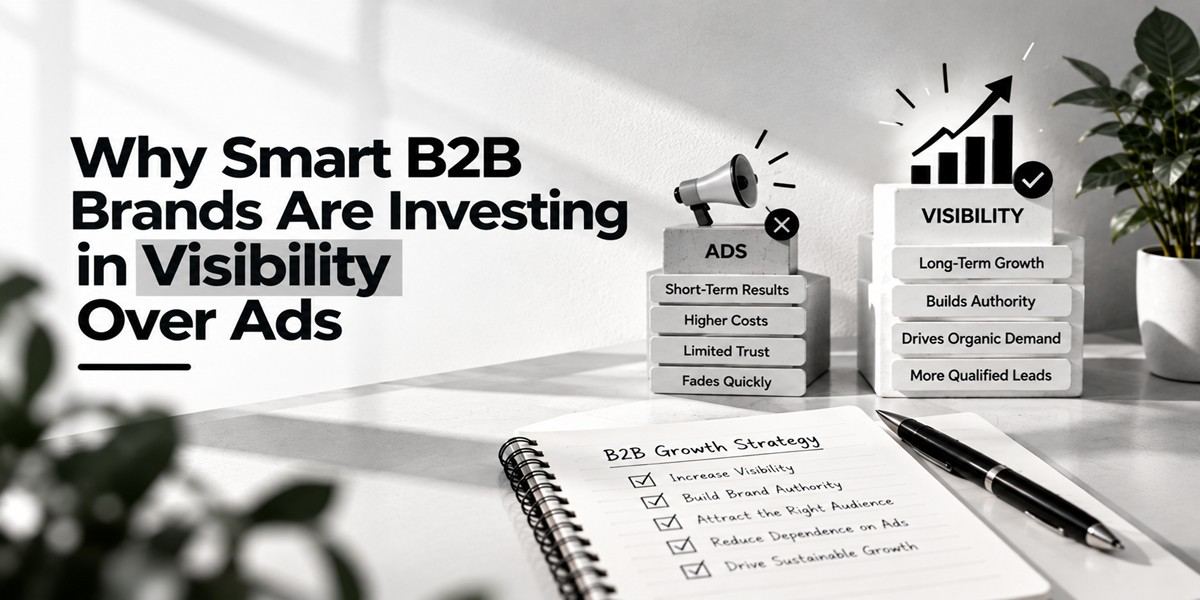
This makes sense once you remember how language models work. They learn which brands belong to a topic from how often and where those brands are discussed. A mention on a local news site, a review platform, an industry directory, or a Reddit thread counts, even without a link. To go deeper, read why social mentions matter for brands and why smart B2B brands are investing in visibility over ads.
What to do:
- Pursue digital PR, podcast appearances, and local press that name your brand.
- Keep your Google Business Profile, Yelp, and industry directory listings complete and consistent.
- Encourage reviews that mention your services and location by name.
- Show up where your buyers already talk, such as Reddit, Quora, YouTube, and niche forums.
Pattern 2: Ranking on Google is an entry ticket, not a guarantee
Classic SEO still feeds AI answers, because most engines retrieve candidates from a search index. But a top ranking no longer promises a citation. In an analysis of 863,000 search results and 4 million citations, only about 38% of URLs cited in Google AI Overviews also ranked in the top 10 for the same query, down from about 76% a year earlier (Search Engine Journal, Ahrefs data).
The rest came from pages ranking further down or not ranking in the top 100 at all. The reason is fan-out: Google now pulls citations from related searches, not only from the exact question the user typed.
So rankings still matter, just not always for the keyword you are tracking. A page that ranks well for a narrow sub-question can beat the page-one winner for the head term. If your foundation needs work first, here is why B2B websites need a technical SEO strategy before scaling content.
What to do:
- Keep doing the SEO fundamentals: crawlable pages, fast load times, matched search intent, and clean technical health.
- Make sure AI crawlers are not blocked in your robots.txt file.
- Track rankings for clusters of related questions, not just one head keyword per page.
Pattern 3: Pages that match the sub-questions win
Because engines fan out into smaller searches, the page that answers one sub-question precisely often beats the page that covers everything loosely. Your headings are the clearest signal of what each section answers.
In a study of nearly 17,000 queries and over 350,000 pages, pages with headings that closely matched the user’s query were cited 41% of the time, compared with 29% for pages with weak heading matches (AirOps, The Fan-Out Effect Report). The same research found that focused pages tend to outperform long “ultimate guides” that try to cover every angle.
Think of each page as the best answer to one question, supported by a cluster of related pages that answer the follow-ups. This is also how search engines and AI models understand SEO entities: as connected topics, not isolated keywords.
What to do:
- List the real follow-up questions buyers ask: cost, timeline, materials, comparisons, risks, and “near me” variations.
- Write H2 and H3 headings in the same words a buyer would use, often as questions.
- Build topic clusters: one core page plus supporting pages for each major sub-question, linked together.
- Split bloated guides into focused pages when sections are really answering different questions.
Pattern 4: Answer first, in passages that stand on their own
AI engines quote passages, not whole pages. A section that opens with a direct, specific answer is easy to lift into a response. A section that warms up with background for three paragraphs gets skipped, even when the answer is in there somewhere.
The best citation candidates read like a short “answer capsule”: one or two sentences that fully answer the heading above them, followed by the detail that proves it. Each section should still make sense if someone read it alone, with no “as mentioned above” or missing context.
Here is the difference in practice for a heading like “How long does a paver patio take to install?”
- Hard to cite: “Every project is unique, and many factors come into play when planning your outdoor space…”
- Easy to cite: “Most paver patios take 3 to 5 days to install once permits are approved. Larger patios with walls or fire features can take up to two weeks.”
What to do:
- Put the direct answer in the first one or two sentences under every heading.
- Keep sections focused on one idea, and repeat the key noun instead of using “it” or “this” across sections.
- Use tables for comparisons and short numbered lists for steps.
- Move your strongest facts and answers toward the top of the page.
Pattern 5: Fresh, specific facts earn trust
An AI model can already write generic advice on its own. What it cannot invent is your real data: your prices, your timelines, your local conditions, your survey results, your customer outcomes. That is why pages with specific, attributable facts tend to get cited over pages that repeat what everyone else says.
Freshness works the same way. Engines lean toward recently updated content, especially for topics where prices, rules, or products change. An outdated page with a 2022 date and old figures signals risk, so the engine looks elsewhere.
Agreement matters too. Engines prefer claims that line up with other trusted sources. A bold claim nobody else supports is more likely to be dropped than quoted.
What to do:
- Add first-hand numbers you can stand behind: average project cost in your area, typical timelines, and results from real jobs.
- Show a visible “last updated” date and actually update the content behind it.
- Review your top pages every quarter and refresh outdated figures first.
- Cite your sources so the engine can verify your claims against others.
Pattern 6: Every AI platform has its own source pool
ChatGPT, Perplexity, Gemini, Google AI Overviews, and Claude do not cite the same websites. Each retrieves from a different index and leans on different kinds of sources, so a brand can be visible on one and missing on another.
Platform | Where it tends to look | What helps most |
ChatGPT | Search index results, reference sites like Wikipedia, “best of” lists | Ranking for fan-out queries, being named in third-party lists and reviews |
Perplexity | Many sources per answer, with heavy use of forums and community discussion | Active, genuine presence on Reddit and niche communities, fresh content |
Google AI Overviews and AI Mode | Google’s own index, YouTube, related searches | Strong Google SEO across topic clusters, YouTube videos, a complete Google Business Profile |
Gemini | Google’s index and ecosystem | The same Google fundamentals plus clear, well-structured pages |
These patterns also shift over time. Platforms change their search partners and source preferences, sometimes within weeks. A strategy built on a single channel or platform is fragile. Our B2B marketing guide for the AI-era buyer covers how to spread visibility across the channels buyers actually use.
What to do:
- Spread your presence across your own site, reviews, directories, YouTube, forums, and press.
- Test your key questions on each platform rather than assuming one result reflects them all.
- Re-check visibility monthly, because what worked last quarter may not work now.
Your 30-day AI citation action plan
You do not need to fix everything at once. Work through these steps in order, starting with the pages that already bring in leads.
- Write down 15 to 20 questions your buyers actually ask. Run each one in ChatGPT, Perplexity, Gemini, and Google, and note who gets cited.
- Fix access. Confirm AI crawlers are allowed in robots.txt, pages load fast, and key content is visible without heavy JavaScript.
- Rewrite your top 5 pages. Add question-style headings, an answer-first opening under each, and real numbers from your business.
- Fill the gaps. Create focused pages for the sub-questions your benchmark showed competitors winning.
- Build off-site mentions. Update directory listings, ask happy customers for detailed reviews, and pitch one local or industry publication.
- Refresh and re-test. Update dates and figures, then re-run your benchmark questions after 30 days and compare.
How to measure progress:
- Citation share: how often your brand is named or linked across your benchmark questions. One of these brand monitoring tools can track this at scale.
- Platform coverage: which engines cite you and which do not.
- AI referral traffic: visits from chatgpt.com, perplexity.ai, and similar sources in your analytics.
- Lead quality: ask new leads how they found you, and add “AI assistant” as an option on your forms.
The bottom line
AI engines cite brands that the web already talks about, on pages that answer specific questions clearly, with facts that are fresh and verifiable. None of that is a trick. It is the same work that builds a trusted business, organized so a machine can find it, read it, and quote it.
Start with your benchmark questions this week. Once you see who AI engines name today, you will know exactly which gaps to close first.
Want to know where your brand stands in AI search? Get in touch for an AI visibility check, and we will show you which questions you are winning, which you are missing, and what to fix first.
FAQs:
What is an AI citation?
An AI citation is a link or source reference that an AI engine like ChatGPT, Perplexity, or Google AI Overviews shows alongside its answer. Being cited means the engine used your page to support what it told the user.
Is SEO still important for AI search?
Yes. Most AI engines retrieve candidate pages from a search index, so strong SEO gets you into the pool. It just no longer guarantees a citation on its own. Off-site mentions, focused pages, and answer-first writing decide who gets picked from that pool.
Do backlinks still matter for AI citations?
They matter less than they do for classic rankings. Backlinks help pages rank, which helps retrieval, but brand mentions across the web show a much stronger link to AI visibility than link counts do.
Does schema markup help with AI citations?
The evidence is mixed. Some studies show a modest lift for pages with structured data, while controlled tests have found little or no short-term change. Treat schema as a helpful long-term signal for describing your business clearly, not a quick fix.
Do I need an llms.txt file?
It is not a priority. Current data suggests AI crawlers rarely request these files. Your time is better spent on crawlable, well-structured pages and earning mentions.
How long does it take to get cited by AI?
On-page changes like answer-first rewrites and refreshed facts can show up within weeks once pages are recrawled. Off-site brand mentions take longer to build, often several months, but they compound over time.