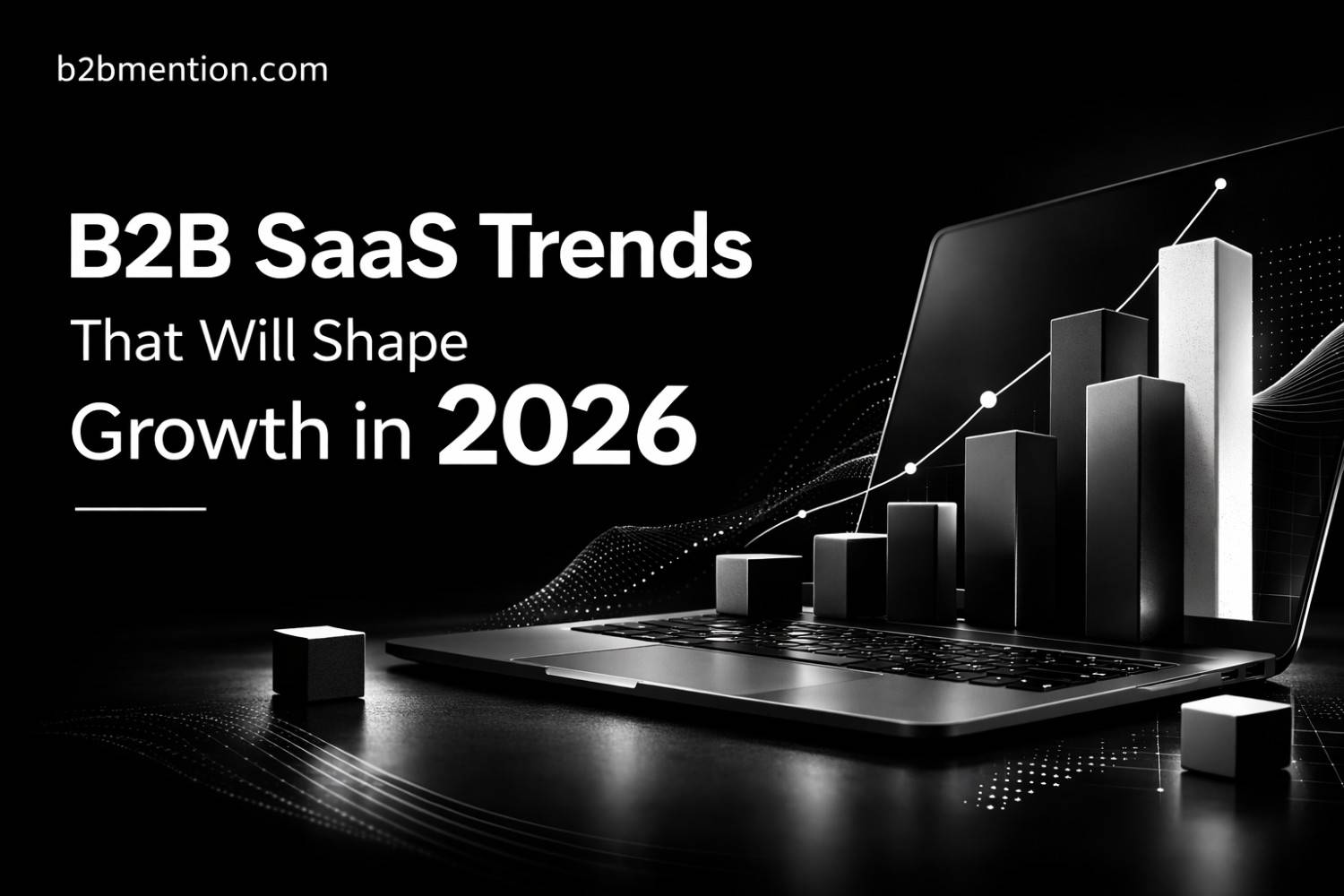

The B2B SaaS industry is entering a new era driven by AI, buyer-led research, data intelligence, and revenue accountability. In 2026, SaaS companies that rely on traditional marketing tactics will struggle to compete with organizations that adopt AI-powered marketing, hyper-personalization, and buyer-intent strategies.
Modern B2B buyers complete 70–80% of their decision journey before speaking to sales, meaning SaaS brands must influence buyers across search engines, AI platforms, and digital channels long before direct contact.
This article explores 22 B2B SaaS trends shaping the future of the industry in 2026 with actionable insights for marketers, founders, and revenue leaders.
Why B2B SaaS Marketing Is Changing in 2026
Three major shifts are redefining the SaaS landscape:
- AI-driven buyer discovery
- Revenue-focused marketing
- Data-powered personalization
For example, 94% of marketers plan to use AI in content creation and marketing workflows, highlighting the growing role of AI across the B2B ecosystem. (HubSpot)
Meanwhile, AI platforms, search engines, and recommendation systems now influence how B2B buyers discover SaaS vendors.
This means companies must optimize not only for SEO, but also for AEO (Answer Engine Optimization) and GEO (Generative Engine Optimization).
22 B2B SaaS Trends That Will Define the Industry in 2026
1. AI Becomes the Core Engine of B2B Marketing
AI is evolving from a productivity tool into a strategic decision engine.
Instead of just generating content, AI now analyzes:
- Buyer behavior
- Intent signals
- Pipeline data
- Engagement trends
This enables marketing teams to predict where demand exists and how to capture it faster. (UnboundB2B)
2. AI Agents Will Run Campaigns Autonomously
The next phase of SaaS marketing includes AI agents that execute marketing workflows.
These AI systems can:
- Optimize campaigns
- Adjust budgets
- Personalize messaging
- Manage lead nurturing
AI agents will effectively function as digital marketing team members.
3. Intent Data Will Drive Demand Generation
Intent data helps SaaS companies identify which businesses are actively researching solutions.
Organizations use intent signals to:
- Prioritize high-value accounts
- Personalize outreach
- Improve conversion rates
More than 67% of companies now use intent data for digital advertising and lead generation. (Intentsify)
4. Hyper-Personalization Will Replace Generic Marketing
In 2026, generic messaging will fail.
B2B buyers expect:
- tailored content
- personalized landing pages
- relevant product recommendations
AI enables personalization at scale by analyzing buyer behavior and industry signals.
5. Revenue Marketing Will Replace Lead Generation
Marketing teams are no longer measured solely by MQLs or traffic.
Instead, success metrics now include:
- pipeline contribution
- revenue attribution
- deal acceleration
Revenue marketing aligns sales, marketing, and product teams around growth.
6. Account-Based Marketing (ABM) Will Scale With AI
ABM is evolving from a niche enterprise strategy into a scalable growth engine for mid-market SaaS companies.
Modern ABM platforms combine:
- automation
- intent data
- predictive analytics
This allows companies to run personalized campaigns for hundreds of accounts simultaneously. (aimers.io)
7. Community-Led Growth Will Become a Key GTM Strategy
SaaS companies increasingly build communities instead of audiences.
Examples include:
- product communities
- founder communities
- customer communities
Communities drive:
- organic acquisition
- brand loyalty
- product feedback.
8. First-Party Data Will Replace Third-Party Cookies
With the decline of third-party cookies, SaaS companies must prioritize:
- CRM data
- product usage data
- first-party behavioral insights
This shift improves data privacy compliance and targeting accuracy.
9. Buyer-Led Content Will Replace Brand-Led Messaging
Modern B2B buyers trust:
- customer stories
- peer recommendations
- case studies
More SaaS brands will invest in customer-generated content and social proof.
10. Content Will Be Designed for AI Search Engines
AI search platforms like ChatGPT, Perplexity, and Google AI Overviews are changing how buyers discover information.
Content must now be optimized for:
- AI answers
- structured data
- question-based search
This approach is known as Generative Engine Optimization (GEO).
11. B2B Video Will Dominate Content Marketing
Video is becoming a powerful format for explaining complex SaaS solutions. Platforms such as Invideo can help SaaS teams create product explainers, expert interviews, webinars, and demo videos more efficiently. Popular formats include:
Popular formats include:
- product explainers
- expert interviews
- webinars
- demo videos
Video content improves engagement, retention, and buyer education.
12. Product-Led Growth (PLG) Will Expand
Product-led growth allows buyers to experience value before speaking with sales.
Key PLG strategies include:
- free trials
- freemium models
- self-serve onboarding
This approach reduces friction in the buying journey.
13. Customer Experience Will Drive SaaS Retention
In SaaS, growth depends not only on acquisition but also retention and expansion.
Companies will invest in:
- onboarding optimization
- customer success teams
- usage analytics
Retention is often more profitable than new acquisition.
14. Marketing and Sales Tech Stacks Will Consolidate
Many SaaS companies currently operate with overly complex marketing stacks.
In 2026, organizations will focus on:
- integrated platforms
- unified data architecture
- AI-enabled tools
This improves operational efficiency and decision-making.
15. Predictive Analytics Will Improve Pipeline Forecasting
Predictive analytics helps revenue teams anticipate:
- buyer readiness
- churn risk
- deal probability
This allows SaaS companies to forecast revenue with greater accuracy.
16. Omnichannel B2B Marketing Will Become Standard
B2B buyers interact with brands across multiple touchpoints.
Successful SaaS companies create seamless experiences across:
- search
- webinars
- events
Omnichannel strategies increase brand visibility and engagement.
17. Thought Leadership Will Build Trust
Trust plays a critical role in B2B buying decisions.
Companies that publish expert insights, research, and industry analysis establish stronger credibility.
18. Data-Driven Marketing Will Dominate Strategy
Modern SaaS marketing relies heavily on analytics.
Marketing teams track:
- engagement data
- attribution models
- conversion metrics
Data insights help refine campaign performance and messaging.
19. AI-Powered Sales Enablement Will Accelerate Deals
AI tools are helping sales teams:
- generate proposals
- summarize buyer conversations
- predict objections
These tools improve efficiency and close deals faster.
20. Brand Authority Will Matter More Than Ever
In crowded SaaS markets, strong brands outperform generic competitors.
Brand authority is built through:
- consistent content
- thought leadership
- industry recognition
21. SaaS Buyers Will Demand Transparency
Modern buyers expect vendors to clearly communicate:
- pricing
- implementation requirements
- ROI potential
Transparency increases trust and buyer confidence.
22. Customer Education Will Become a Growth Channel
Educational content helps prospects understand the value of SaaS products.
Examples include:
- training resources
- product tutorials
- industry guides
Educated buyers convert faster and remain customers longer.
How B2B SaaS Companies Should Prepare for 2026
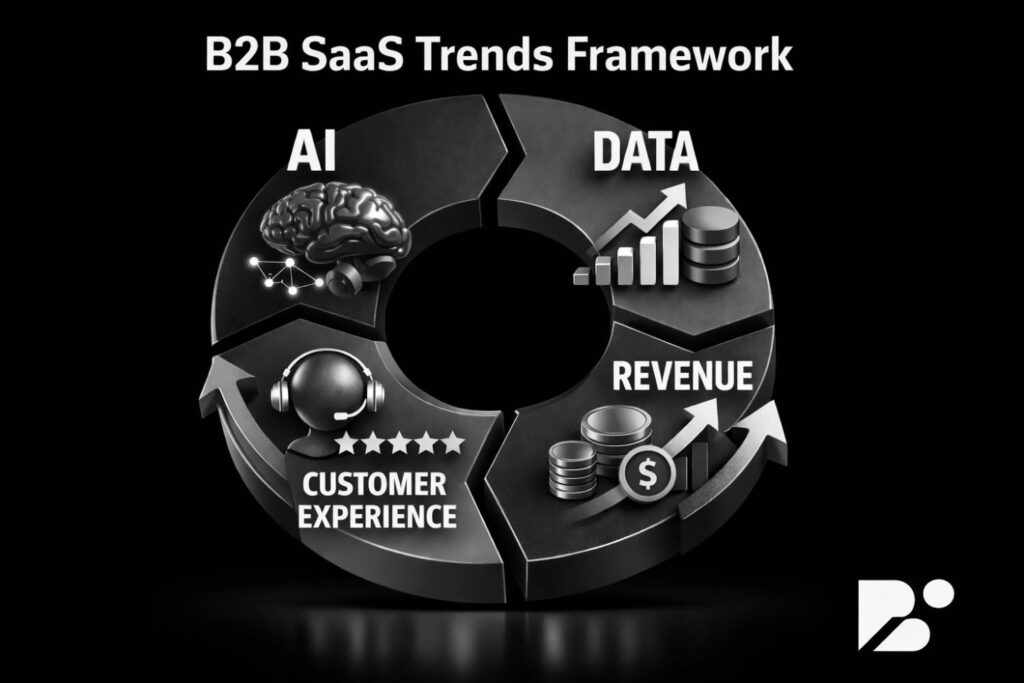
To stay competitive, SaaS organizations should prioritize:
1. AI-Driven Marketing
Use AI for campaign optimization, analytics, and personalization.
2. Intent-Based Demand Generation
Focus on buyers already researching solutions.
3. Content for AI Discovery
Create content optimized for both search engines and AI platforms.
4. Revenue-Focused Marketing
Align marketing goals with pipeline and revenue metrics.
Companies that adopt these strategies will gain a significant competitive advantage in the evolving SaaS market.
Final Thoughts
The B2B SaaS industry is evolving faster than ever.
AI, data intelligence, and buyer-led discovery are transforming how companies attract, convert, and retain customers.
Organizations that embrace these 22 B2B SaaS trends in 2026 will position themselves for long-term growth, stronger customer relationships, and sustainable competitive advantage.
As the B2B SaaS landscape evolves, businesses need smarter ways to identify, reach, and engage high-intent buyers. B2Bmention helps organizations stay ahead by connecting brands with targeted B2B audiences through data-driven demand generation, content distribution, and buyer intent insights. By leveraging platforms like B2Bmention, SaaS companies can accelerate pipeline growth and turn emerging trends into real revenue opportunities.